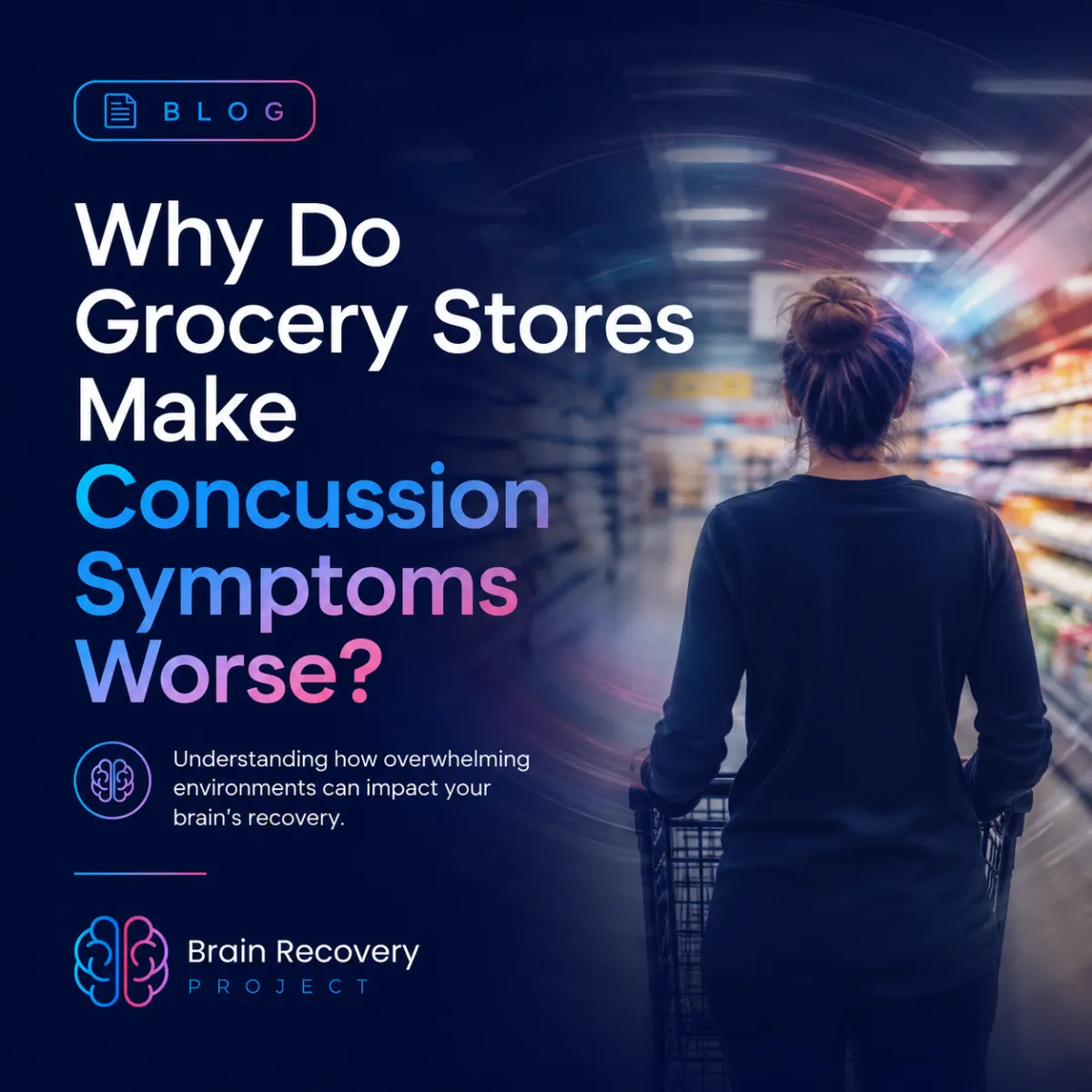
Why Do Grocery Stores Make Concussion Symptoms Worse?
Have you ever felt mostly okay at home, but then walked into a grocery store and suddenly felt dizzy, foggy, nauseated, overwhelmed, or like you needed to leave?
If that has happened after a concussion, you are not alone. This is a very common experience, and it can be confusing because it may feel like a “simple” trip to the store should not be that hard.
But for your brain, a grocery store is not simple.
A store has bright lights, shelves full of patterns, people walking in different directions, carts moving around you, signs overhead, music playing, and sounds coming from multiple directions. You are also scanning shelves, turning your head, reading labels, making decisions, and trying to move safely through the space.
That is a lot of information for your brain to process at one time.
Your Brain May Be Dealing With a Processing Backlog
One way to think about this is that your brain may have a temporary processing backlog after concussion.
Imagine a computer that used to run smoothly. After the injury, it may still work, but when too many tabs are open at once, it starts to slow down. At home, there may be fewer “tabs” open. The environment is quieter, calmer, and more predictable.
In a grocery store, many systems are being challenged at the same time. Your eyes, inner ear, brain, body, attention, and balance system are all working together to make sense of the environment.
When the amount of visual, sound, movement, and thinking demand becomes too much too quickly, symptoms can increase.
What Is Visual Motion Sensitivity?
One common reason people feel worse in stores after concussion is visual motion sensitivity.
Visual motion sensitivity means your symptoms may increase when there is a lot of movement or visual activity around you. This may happen when people walk past you, carts move nearby, you scan busy shelves, you turn your head while walking, or you move through patterned aisles under bright lights.
This does not mean you are weak. It does not mean you are imagining your symptoms. It also does not automatically mean you are damaging your brain.
It usually means the environment is currently more than your brain can comfortably process.
The Goal Is Not Avoidance or Pushing Through
When busy places trigger symptoms, it is natural to want to avoid them. Avoidance may reduce symptoms in the short term, but avoiding stores, crowds, and busy environments for too long can make it harder to rebuild tolerance.
At the same time, pushing too hard is not the answer either. If you force yourself through a full grocery trip, symptoms spike, and you feel wiped out for the rest of the day, that was probably too much too soon.
The goal is not to avoid normal life forever. The goal is to find the right starting point and build from there.
Start by Finding Your Current Threshold
Your threshold is the amount of activity or sensory input you can handle before symptoms noticeably increase.
For grocery stores, ask yourself:
·How long can I be in the store before symptoms rise?
·Can I handle two minutes, five minutes, or ten minutes?
·Is a small store easier than a large store?
·Are quiet aisles easier than crowded aisles?
·Do lights, scanning shelves, head turns, or noise seem to be the biggest trigger?
This information helps you know where to begin. It also helps you avoid guessing or bouncing between doing too little and doing too much.
Practical Recovery Tips for Grocery Store Dizziness
1. Start Smaller Than You Think You Need To
If stores are currently overwhelming, begin with a smaller, calmer version of the task. That may mean going during a quiet time of day, choosing a smaller store, or walking in for only a few minutes.
2. Use a Short List
A short list reduces decision-making and scanning. Instead of trying to complete a full shopping trip, start with two or three items. This helps lower the total demand on your brain.
3. Leave Before Symptoms Climb Too High
Leaving early is not failure. It can be smart training. The goal is to practice the environment without creating a large symptom spike that wipes you out afterward.
4. Reduce Extra Input Temporarily
If lights are a major trigger, a hat or sunglasses may help for a short period of time. Going with another person may also reduce stress, decision-making, and the need to manage everything alone.
These tools should be used as temporary supports, not permanent crutches. The goal is to gradually build your tolerance.
5. Change One Variable at a Time
As symptoms improve, progress slowly. You might increase your time in the store first. Later, you might try a busier time of day, add more scanning, walk a little faster, or tolerate more head turns.
Changing one thing at a time gives your brain a better chance to adapt.
Recovery Is About the Right Dose
Concussion recovery is not always about doing more. It is about finding the right dose.
Too little exposure may keep your world small. Too much exposure may flare symptoms and make you feel discouraged. The right amount gives your brain practice while still respecting your current limits.
A helpful question is: “What is my current tolerance level, and how can I build from there?”
Frequently Asked Questions
Why do grocery stores make me dizzy after a concussion?
Grocery stores can create a high sensory load. Bright lights, busy shelves, moving people, carts, noise, scanning, and decision-making can all challenge the brain after concussion.
Does dizziness in a store mean I am damaging my brain?
Not usually. Increased symptoms often mean the environment is currently more than your brain can comfortably process. If symptoms are severe, worsening, or concerning, you should speak with a healthcare professional.
Should I avoid grocery stores until I feel completely better?
Complete avoidance may help short term, but it may not rebuild tolerance. A better approach is usually gradual, symptom-guided exposure that starts at the right level.
What should I do if I feel overwhelmed in a store?
Pause, slow down, reduce input if possible, and leave before symptoms climb too high. For future trips, start smaller with a shorter list, quieter time of day, or shorter duration.
How do I know if I am doing too much?
If symptoms spike significantly or you are wiped out for the rest of the day, the exposure was likely too much. Try reducing duration, busyness, or complexity next time.
Key Takeaways
·Grocery stores can be challenging after concussion because they create a large amount of visual, sound, movement, and thinking demand.
·Visual motion sensitivity is one common reason busy environments trigger dizziness, fogginess, nausea, or overwhelm.
·Symptoms in stores do not mean you are weak or imagining it.
·The goal is not complete avoidance or pushing through. The goal is graded, symptom-guided progression.
·Start with your current tolerance level, build gradually, and change one variable at a time.
Conclusion: You Can Build Your Way Back
If grocery stores, crowds, lights, or busy places make you feel dizzy or overwhelmed after concussion, your symptoms can make sense.
You do not have to avoid normal life forever. You need a plan that starts where your brain is right now and helps you gradually build tolerance.
Start small, stay consistent, and keep moving forward.
Download the free Concussion Symptom Checklist from Brain Recovery Project here to begin identifying your symptoms, triggers, and patterns. If you want more step-by-step guidance, explore the Brain Recovery Project Concussion Recovery Course here for a structured plan to better understand your symptoms and move forward with confidence.
