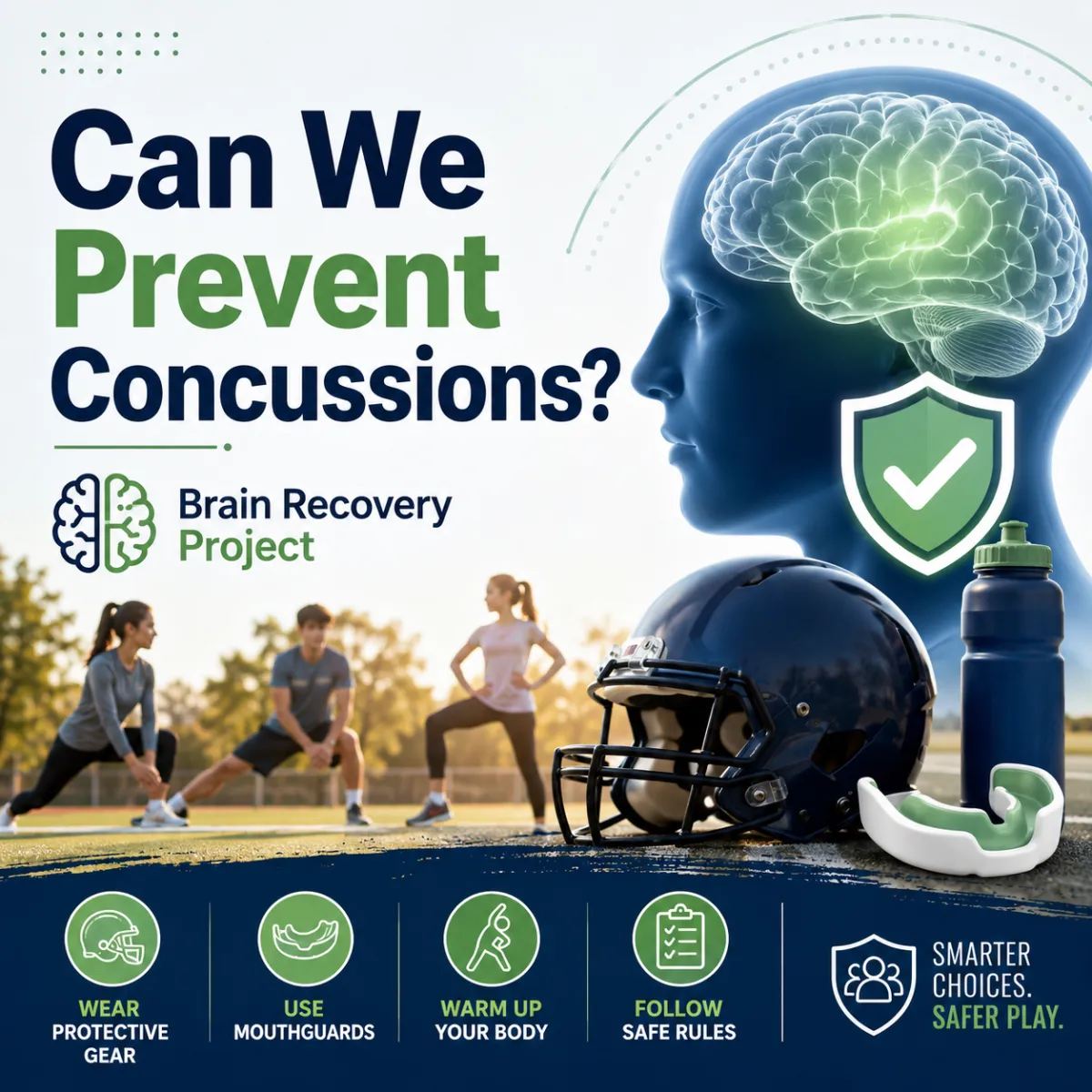
Can We Prevent Concussions?
You may have heard someone say:
“You can’t prevent concussions.”
That is partly true.
No helmet, mouthguard, exercise program, or rule change can prevent every concussion. Concussions can happen during sports, falls, car accidents, playground injuries, or unexpected collisions.
But that does not mean we are powerless.
A better way to think about concussion prevention is this:
We may not be able to prevent every concussion, but we can lower the risk.
That distinction matters.
Concussions can affect how your brain works, how you feel, how you learn, how you sleep, and how you participate in school, work, sports, and everyday life. Because of that, it is worth taking practical steps to protect the brain whenever possible.
The goal is not to make someone “concussion-proof.”
The goal is to reduce risk and respond quickly if a concussion does happen.
Why Lowering Concussion Risk Matters
A concussion is a brain injury that can temporarily change how the brain functions.
Symptoms can look different from person to person. Some people may have headaches, dizziness, nausea, light sensitivity, trouble concentrating, fatigue, mood changes, sleep problems, or feeling “off.”
For athletes, a concussion can affect school, sports performance, reaction time, balance, vision, and confidence returning to play.
For parents, coaches, and athletes, this means concussion safety should not only begin after an injury happens. It should also include smart habits that may reduce the chance of injury in the first place.
Here are several practical ways to lower concussion risk.
1. Use the Right Helmet
Helmets are important, but they do not make you concussion-proof.
This is one of the biggest myths in concussion prevention.
A helmet can help protect the head, reduce certain types of impact forces, and lower the risk of more serious head injuries like skull fractures. But a helmet cannot stop all of the forces that may cause a concussion, especially forces that involve the brain moving inside the skull.
That said, helmet choice still matters.
When choosing a helmet, look for one that is:
Designed for the specific sport
Properly fitted
Worn correctly every time
In good condition
Replaced when damaged or expired
Rated highly by independent safety testing when available
The Virginia Tech Helmet Lab provides independent helmet ratings for multiple sports and recommends choosing 4- or 5-star helmets when possible.
But remember: the best helmet is not always the most expensive helmet.
A lower-cost helmet that fits well and is worn correctly may be more useful than an expensive helmet that fits poorly or is not used consistently.
The key message is simple:
A helmet is one layer of protection. It is not a guarantee.
2. Wear a Mouthguard When Recommended or Required
Mouthguards are best known for protecting the teeth, lips, jaw, and mouth.
They are especially important in contact sports or sports where a blow to the face or jaw may occur.
Some research in ice hockey has found that mouthguard use was associated with a lower concussion rate across age groups. This does not mean a mouthguard prevents every concussion, but it may be another helpful layer of protection.
A good mouthguard should:
Fit comfortably
Stay in place during activity
Allow the athlete to breathe and talk reasonably well
Be used consistently
Be replaced when worn out or damaged
For sports where mouthguards are required or recommended, wearing one is a simple and practical step.
The takeaway:
Mouthguards are not just about protecting your teeth. They may also be part of a larger concussion risk-reduction plan.
3. Do a Better Warmup
A good warmup should do more than just “get loose.”
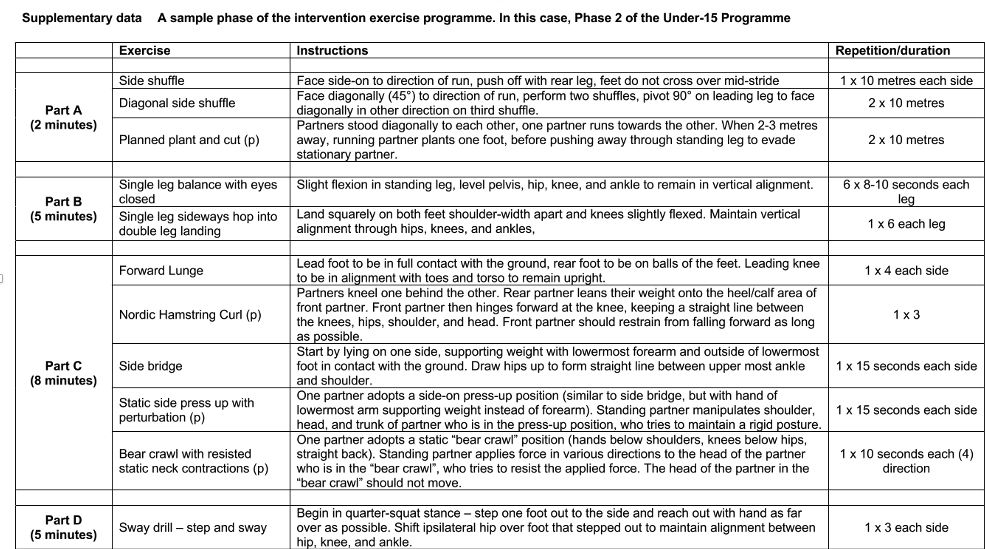
Many athletes warm up by jogging a lap, stretching for a few minutes, and then starting practice. While that may increase body temperature, it does not always prepare the body for the balance, strength, cutting, jumping, landing, and reaction demands of sport.
A better option is a neuromuscular warmup.
That simply means a warmup that helps train the body and brain to move with better control.
A good neuromuscular warmup may include:
Balance exercises
Strength movements
Jumping and landing practice
Cutting and change-of-direction drills
Core and hip control
Sport-specific movement
Feedback from a coach, trainer, or clinician
Why does this matter?
Many injuries happen when athletes are off balance, poorly positioned, fatigued, or unable to control their body during fast movements. Improving movement control may help reduce overall injury risk.
In one study of schoolboy rugby players, teams that completed a movement-control warmup at least three times per week had a large reduction in overall match injuries and a significant reduction in concussions.
The important part is not just doing the warmup.
It is doing it consistently and doing it well.
Coaches, parents, and athletes should focus on quality, not just checking the box.
A helpful way to think about it is this:
The things that help keep athletes healthy often help them perform better, too.
Better balance, strength, landing mechanics, and cutting control can support both injury reduction and athletic performance.
4. Follow Safer Rules
Rules matter.
This can be a difficult topic in sports, because some people worry that safer rules make athletes less tough or less prepared.
But safer rules do not mean weaker athletes.
They mean smarter protection.
In youth and adolescent ice hockey, removing body checking has been associated with lower concussion rates during games. More years of body-checking experience has not clearly been shown to protect players from concussion.
In American football, limiting the number, duration, and intensity of contact practices has been linked to lower rates of practice-related concussions.
This matters because repeated head impacts and high-risk contact situations can add up.
Safer sport environments may include:
Age-appropriate contact rules
Limits on high-contact practices
Teaching proper technique
Enforcing penalties for dangerous play
Removing athletes from play when concussion is suspected
Clear return-to-play guidelines
Coaches and parents taking symptoms seriously
Athletes can still train hard, compete, and develop skills while reducing unnecessary risk.
The goal is not to remove challenge from sports.
The goal is to remove unnecessary danger.
5. Speak Up After a Hit to the Head
One of the most important concussion safety strategies is also one of the simplest:
Speak up if something does not feel right.
A concussion does not always cause someone to pass out. In fact, many concussions happen without loss of consciousness.
Symptoms may appear right away or develop over minutes to hours.
An athlete should tell someone if they notice:
Headache
Dizziness
Nausea
Blurry vision
Light or noise sensitivity
Feeling slowed down
Brain fog
Trouble concentrating
Balance problems
Unusual fatigue
Mood changes
Feeling “off” or not like themselves
Trying to “tough it out” can make things worse.
If a concussion is suspected, the athlete should be removed from play and evaluated by a qualified healthcare professional.
Returning too soon can increase risk and may delay recovery.
The message for athletes should be clear:
Reporting symptoms is not weakness. It is how you protect your brain and your future.
Practical Concussion Risk-Reduction Checklist
Here is a simple checklist for athletes, parents, and coaches:
Equipment
Use the correct helmet for the sport
Make sure the helmet fits properly
Replace damaged or expired helmets
Wear a mouthguard when required or recommended
Training
Use a structured warmup before practices and games
Include balance, strength, jumping, landing, and cutting drills
Focus on movement quality
Complete the warmup consistently, ideally multiple times per week
Rules and Environment
Follow age-appropriate safety rules
Limit unnecessary contact exposure
Enforce rules against dangerous play
Encourage safe technique
Symptom Reporting
Speak up after a head hit or body impact
Do not return to play if concussion is suspected
Get evaluated by a qualified healthcare professional
Follow a structured return-to-play plan
Key Takeaways
Concussions cannot always be prevented, but the risk can often be reduced.
Helmets are important, but they do not make someone concussion-proof.
Mouthguards may offer another layer of protection, especially in sports where they are recommended or required.
A structured neuromuscular warmup may help reduce injury risk and improve athletic performance.
Rules and contact limits can play an important role in reducing concussion risk.
Athletes should always speak up if they hit their head or feel “off.”
The goal is not fear. The goal is smarter protection.
FAQ: Can We Prevent Concussions?
Can concussions be completely prevented?
No. There is no way to prevent every concussion. However, athletes, parents, coaches, and schools can take steps to lower the risk.
Do helmets prevent concussions?
Helmets can help reduce risk, but they do not make someone concussion-proof. They are still important, especially when properly fitted, sport-specific, and worn consistently.
What is the best helmet for concussion prevention?
The best helmet is one that is designed for the sport, fits correctly, is in good condition, and has strong independent safety ratings when available. The most expensive helmet is not always the best choice.
Do mouthguards prevent concussions?
Mouthguards are mainly used to protect the teeth and jaw. Some research suggests they may be associated with lower concussion rates in certain sports, but they should be viewed as one part of a broader safety plan.
What kind of warmup helps lower injury risk?
A neuromuscular warmup that includes balance, strength, jumping, landing, cutting, and sport-specific movement is more helpful than simply jogging and stretching.
Should an athlete keep playing if they only have mild symptoms?
No. If a concussion is suspected, the athlete should stop playing and be evaluated. Mild symptoms can still be signs of a concussion.
Is it weak to report concussion symptoms?
No. Reporting symptoms is one of the smartest and most important things an athlete can do. It protects the brain and supports a safer recovery.
Still Dealing With Concussion Symptoms?
You do not have to guess your way through recovery. The Brain Recovery Project Concussion Recovery Course helps you understand your symptoms, complete a guided self-assessment, and build a personalized recovery plan.
Take the next step in your recovery today. Click here to learn more.
Conclusion: You Can’t Prevent Every Concussion, But You Can Lower the Risk
Concussions are not always preventable.
But that does not mean we should ignore prevention.
By using the right helmet, wearing a mouthguard when appropriate, completing a quality warmup, following safer rules, and speaking up when symptoms occur, athletes and families can take meaningful steps to lower risk.
Protecting the brain helps athletes stay in school, stay in sports, and stay healthy for the future.
At Brain Recovery Project, our goal is to help people better understand concussion, headache, dizziness, and brain recovery through practical, step-by-step education.
If you or someone you care about is recovering from a concussion, learning what to do next can make the process feel less overwhelming.
Brain Recovery Project helps you understand your symptoms, identify possible recovery barriers, and build a more informed path forward.
