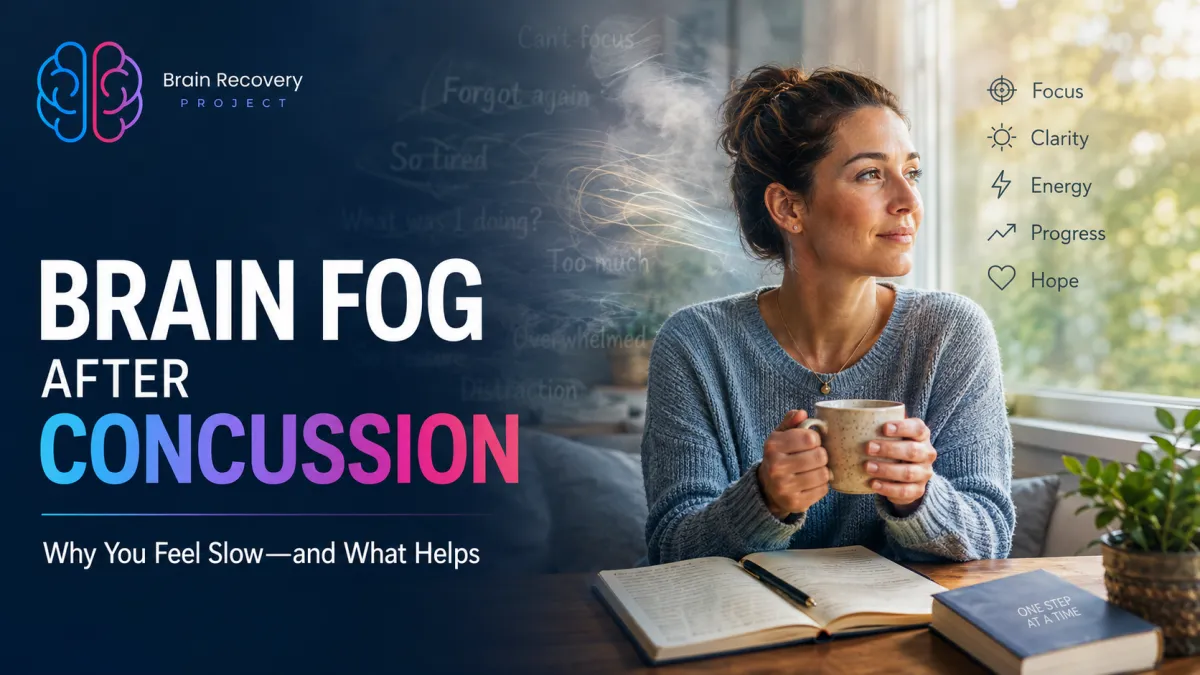
Brain Fog After Concussion: Why You Feel Slow and What Helps
Have you ever read the same paragraph three times and still not remembered what you just read? Maybe you walked into a room and forgot why you were there, or a short conversation left you mentally exhausted. After a concussion, many people describe this feeling as brain fog.
Brain fog can be frightening. It may feel as if your intelligence or memory has suddenly disappeared. In many cases, however, it is more helpful to think of brain fog as a temporary problem with mental efficiency and stamina - especially when your brain is also managing headaches, dizziness, poor sleep, stress, pain, or sensory overload.
The reassuring truth: Brain fog does not mean you have lost your intelligence. It often means the demands placed on your brain are greater than its current capacity.
What Does Brain Fog Feel Like?
Brain fog is not one specific medical diagnosis. People may use the term to describe:
·Slowed thinking or processing
·Difficulty concentrating or staying on task
·Trouble finding the right word
·Forgetfulness
·Poor mental endurance
·Feeling detached, overloaded, or mentally exhausted
You may even do well on a short cognitive test but struggle after 30 minutes of reading, working, driving, or conversation. That does not mean your symptoms are imaginary. A brief test in a quiet room is very different from a full day of real-life demands.
Why Does Brain Fog Happen After a Concussion?
After a concussion, familiar tasks may temporarily require more effort. Attention is also limited. If part of your attention is being used to manage a headache, dizziness, light sensitivity, eye strain, neck pain, anxiety, or fatigue, less capacity is available for memory and concentration.
Think of it like a computer with too many programs running in the background. The computer still works, but it runs more slowly, becomes overloaded sooner, and needs more time to recover.
This helps explain why brain fog may change throughout the day. You might feel clearer in the morning and notice your thinking slow down after work, screen time, driving, exercise, or time in a busy environment.
What Can Make Brain Fog Worse?
Poor or Irregular Sleep
Sleep affects attention, memory, emotional regulation, headache sensitivity, and physical recovery. Concussion may disrupt sleep timing, make it harder to fall asleep, or cause daytime fatigue that leads to long naps and an increasingly irregular schedule.
Visual and Balance Demands
Reading, tracking moving objects, turning your head, or walking through a busy store may take extra effort after a concussion. When your visual or balance systems are working harder, less energy is available for the task you are trying to complete.
Headaches, Neck Pain, and Exercise Intolerance
Pain is distracting and exhausting. Difficulty tolerating exercise may also reduce energy and confidence. These symptoms can increase the effort required to work, learn, drive, or socialize.
Stress and Other Health Factors
Stress and anxiety can pull attention inward and make it harder to focus on the task in front of you. Medication, alcohol, cannabis, dehydration, irregular meals, depression, and pre-existing attention or learning differences may also play a role. Brain fog is often influenced by several factors, not just one injury process.
Cognitive Fatigue Is Not Always Memory Loss
Cognitive fatigue means your performance becomes slower or less accurate as the demand continues. You may start a task feeling fine, then gradually lose focus, make more mistakes, or need a long time to recover afterward.
A primary memory problem is different. You may have difficulty taking in or retrieving information even when you are rested and the environment is quiet. A healthcare professional can help determine whether the main issue is attention, fatigue, sleep, mood, pain, medication, or a more specific cognitive problem.
Two Recovery Traps to Avoid
Trap 1: Pushing Until You Crash
Forcing yourself to continue until symptoms become severe can create a boom-and-bust cycle: you overdo it, crash, and then avoid activity for the rest of the day or longer.
Trap 2: Avoiding Every Difficult Activity
Waiting for brain fog to disappear completely before you read, work, exercise, or return to school can also hold you back. Too much avoidance may lower your tolerance and make returning to normal activity feel even harder.
The goal is to find a manageable starting point and build from there. Recovery is usually neither “push through everything” nor “avoid everything.” It is a gradual process of increasing tolerance.
Practical Recovery Tips for Brain Fog
1.Create a consistent daily rhythm. Aim for a regular wake time, meals, planned activity, and bedtime routine. If sleep remains disrupted, discuss it with a healthcare professional.
2.Work in planned blocks. Begin with a manageable amount of focused activity, such as 15 or 20 minutes, followed by a brief low-stimulation break. Stop before you are completely depleted.
3.Reduce unnecessary mental clutter. Work on one task at a time, silence notifications you do not need, use written reminders, and prepare your environment before you begin.
4.Gradually rebuild physical activity. Symptom-guided walking, cycling, or another appropriate aerobic activity may support recovery. Follow the plan recommended by your healthcare team.
5.Treat the symptoms running in the background. Persistent headaches, dizziness, visual strain, neck pain, anxiety, and sleep problems deserve targeted evaluation and treatment.
6.Track function instead of expecting perfection. Notice how long you can read, work, drive, or participate before needing a break. Doing a little more or recovering a little faster is meaningful progress.
When Should You Seek Medical Care?
Seek urgent care: After a recent head injury, get urgent medical help for increasing confusion, repeated vomiting, a seizure, new weakness or numbness, slurred speech, difficulty waking normally, or rapidly worsening neurological symptoms.
Schedule a non-urgent professional evaluation if brain fog is interfering with work, school, driving, or independence; if it is getting worse instead of better; or if sleep, mood, medication, or another medical condition may be contributing.
Key Takeaways
·Brain fog is a common description of reduced mental efficiency and endurance after concussion.
·A normal short test does not make your real-life symptoms less valid.
·Sleep, headaches, dizziness, visual strain, neck pain, stress, and exercise intolerance can all add to the mental load.
·Use planned pacing to prevent crashes, then gradually build your tolerance.
·Measure small improvements in activity duration and recovery time.
Frequently Asked Questions
Is brain fog normal after a concussion?
Many people experience slowed thinking, poor concentration, or reduced mental endurance after a concussion. If symptoms are severe, worsening, or interfering with daily life, talk with a healthcare professional.
Does brain fog mean I have permanent brain damage?
Brain fog does not automatically mean permanent damage or loss of intelligence. It often reflects a temporary mismatch between current demand and available mental capacity, sometimes made worse by other treatable symptoms.
How long does brain fog last after a concussion?
Recovery time varies. Your progress may depend on sleep, symptom burden, activity level, health history, and whether contributing problems are identified and treated. Seek an evaluation if symptoms are not improving or are limiting your independence.
Should I push through brain fog?
Avoid both extremes. Pushing until you crash may trigger a prolonged flare, while avoiding all cognitive activity may reduce tolerance. Use manageable work periods and gradually increase them.
What helps concentration after a concussion?
A consistent schedule, improved sleep, single-tasking, written reminders, planned work-and-break cycles, graded physical activity, and treatment of headaches, dizziness, visual strain, neck pain, mood, or sleep problems may help.
A Hopeful Way Forward
Brain fog does not mean you have lost your intelligence. It often means your current demands are greater than your available capacity, especially when other symptoms are using attention and energy.
Recovery involves gradually increasing that capacity while reducing the factors working against it. With consistent sleep, targeted treatment, smart pacing, and graded activity, many people can steadily rebuild mental stamina.
Next step: Download the free Brain Recovery Project Sleep Hygiene Handout. For a complete step-by-step framework, explore the Brain Recovery Project Concussion Recovery Course.
Evidence Notes
These sources informed the clinical framing of this content.
Patricios JS, et al. Consensus statement on concussion in sport: the 6th International Conference on Concussion in Sport. Br J Sports Med. 2023;57:695-711. Open source
Heslot C, et al. A Systematic Review of Treatments of Post-Concussion Symptoms. J Clin Med. 2022;11:6224. Open source
Bramley H, et al. Sleep Disturbance Following Concussion Is a Risk Factor for a Prolonged Recovery. Clin Pediatr. 2017. Open source
