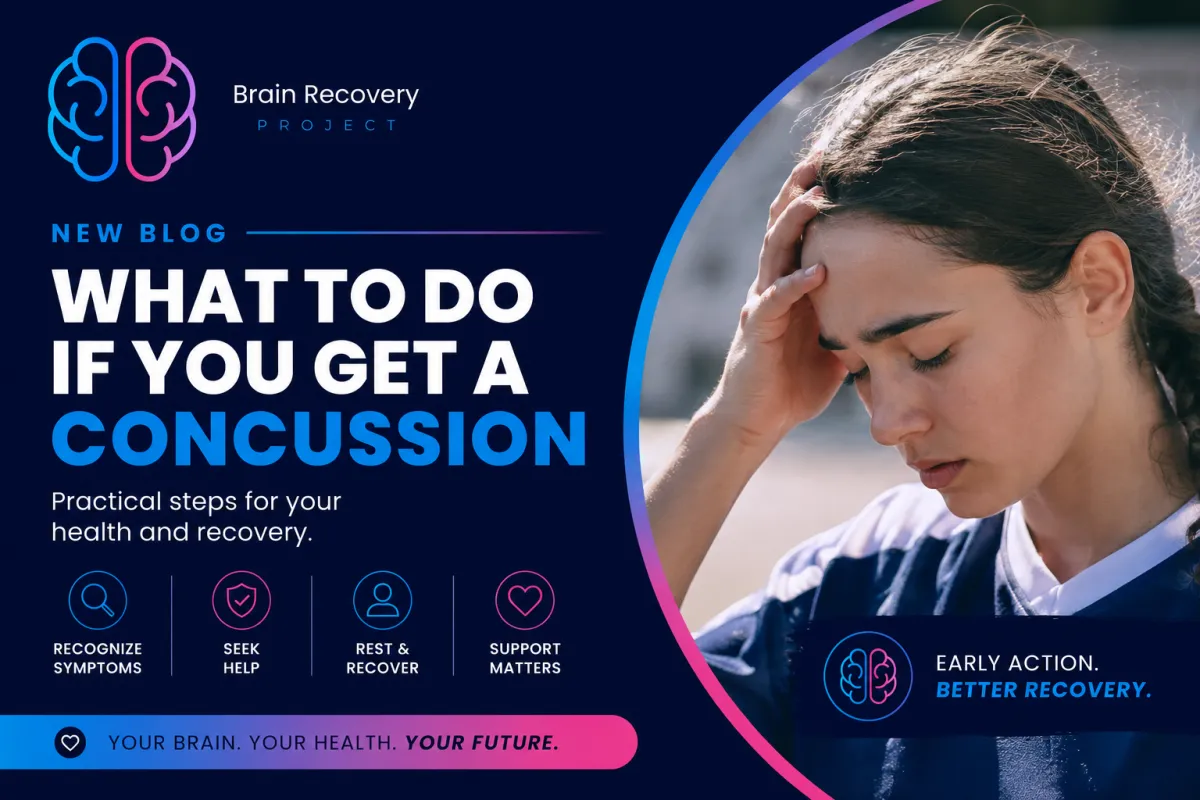
What To Do If You Get a Concussion
If you hit your head, fall hard, or take a big hit during sports, play, or daily life, one of the first questions you may ask is:
“Do I have a concussion?”
A concussion is a brain injury, and it should always be taken seriously. But here is the good news: with the right care, most people recover well.
The most important thing is knowing what to do early, what symptoms to watch for, and how to begin recovery in a safe and guided way.
Step 1: Speak Up Right Away
If you think you may have a concussion, do not ignore it, hide it, or try to “push through.”
Tell someone right away. This may be a parent, coach, teacher, athletic trainer, school nurse, spouse, or another trusted adult.
Common concussion symptoms can include:
Headache
Dizziness
Nausea
Blurry vision
Confusion
Feeling foggy
Balance problems
Sensitivity to light or noise
Neck pain
Fatigue
Feeling “off” or not like yourself
You do not need to have every symptom to have a concussion. Sometimes the symptoms are obvious right away. Other times, they build over minutes, hours or even days.
If there is any concern for a concussion, the safest first step is to stop activity and get checked by a healthcare professional who understands concussion care.
Early evaluation matters. A skilled concussion provider can help identify what systems are involved, guide your return to school, work, exercise, and sport, and help reduce the risk of prolonged symptoms.
Step 2: Watch for Concussion Red Flags
Most concussions do not require emergency care, but some symptoms are more serious and need immediate medical attention.
These are often called red flags.
Go to the emergency room or call for emergency medical help if you notice:
A severe or worsening headache
Repeated vomiting, especially more than two times
Seizures
Weakness or numbness in the arms or legs
Increasing confusion
Unusual behavior
Trouble waking up
Slurred speech
Significant neck pain after the injury
These symptoms are not something to “wait and see” about. They may be signs of a more serious injury and should be evaluated immediately.
Step 3: Take It Easy for the First Day or Two
In the first 24 to 48 hours after a concussion, your brain needs a short period of relative rest.
This does not usually mean lying in a dark room doing absolutely nothing. It means reducing activities that significantly worsen symptoms while still taking care of your basic needs.
During this early stage, focus on:
No sports
No rough play
No return to the game the same day
Drinking water
Eating regular meals
Getting good sleep
Reducing intense screen time if it worsens symptoms
Having a responsible adult monitor you for several hours after the injury
A common question is whether it is okay to sleep after a concussion.
In many cases, sleep is okay as long as symptoms are not worsening and there are no red flags. Sleep is one of the most important tools your brain uses to recover.
Step 4: Do Not Stay in the “Dark Room” Too Long
Years ago, many people with concussions were told to sit in a dark room and avoid almost everything until symptoms fully went away. This was sometimes called cocoon therapy.
We now know that strict rest until every symptom disappears is usually not the best approach.
After a short period of relative rest, recovery should become more active — but still guided.
This may include light activity such as walking, gentle movement, or easy stationary biking, depending on your symptoms and where you are in recovery.
The goal is not to overload your brain. The goal is to gradually reintroduce the right amount of activity at the right time.
Step 5: Understand That Concussion Symptoms Can Come From Different Systems
One of the most important things to understand about concussion recovery is that symptoms can come from different body systems.
For example, a headache after a concussion may come from:
The brain itself
The neck
The visual system
The vestibular system
Problems with heart rate or blood pressure regulation
Sleep disruption
Stress or nervous system overload
This is why guessing is not enough.
Two people may both say, “I have a headache,” but the reason for the headache may be very different.
A neck-related headache may feel like pain in the back of the head, forehead, or behind the eyes.
An eye-related headache may also show up in the forehead, especially with reading, screens, or visually busy environments.
A heart rate or blood pressure regulation problem may feel like pressure in the whole head, especially when standing up or trying to exercise.
These symptoms may sound similar, but they often need different treatment strategies.
That is why a good concussion recovery plan should not be one-size-fits-all. It should help you figure out what is driving your symptoms and what steps are most appropriate for your specific situation.
Step 6: Begin Active Recovery With the Right Support
Active concussion recovery may include:
Light aerobic exercise
Sleep support
School or work adjustments
Gradual return to screens
Neck rehabilitation
Balance exercises
Vestibular therapy
Vision-related strategies
Headache management
Return-to-learn planning
Return-to-play or return-to-activity progression
The right plan depends on your symptoms, your goals, and the systems involved.
For some people, recovery is fairly quick. For others, symptoms last longer because the concussion affected multiple systems at once.
The key is to avoid two common mistakes:
First, do not ignore symptoms and push through too much too soon.
Second, do not completely shut everything down for too long.
The best recovery path is usually somewhere in the middle: safe, gradual, active, and guided.
What Should You Do If You Think You Have a Concussion?
If you think you may have a concussion, remember these steps:
Speak up right away.
Stop playing or stop the activity.
Get checked by a qualified healthcare professional.
Watch for red flags.
Take it easy for the first day or two.
Begin a guided, active recovery plan.
Do not guess your way through symptoms.
A concussion can feel scary, especially when symptoms affect your thinking, emotions, balance, vision, sleep, or ability to exercise. But recovery is possible, and the right plan can make a big difference.
Your brain is what allows you to learn, work, play, think, move, connect, and be yourself.
So protect it.
And if symptoms are not improving, do not wait and hope everything magically goes away. Get the right help and take the next step in your recovery.
Need Help Figuring Out Your Concussion Recovery Plan?
The Brain Recovery Project was created to help people recovering from concussion better understand their symptoms and take a more organized approach to recovery.
Inside the program, you will learn how to complete guided self-assessments, identify possible symptom drivers, and begin building a step-by-step recovery plan.
If you are feeling stuck, overwhelmed, or unsure what to do next, this course can help you better understand your recovery and take the next step with more confidence.
Start your concussion recovery plan today with Brain Recovery Project. Learn more here.
